

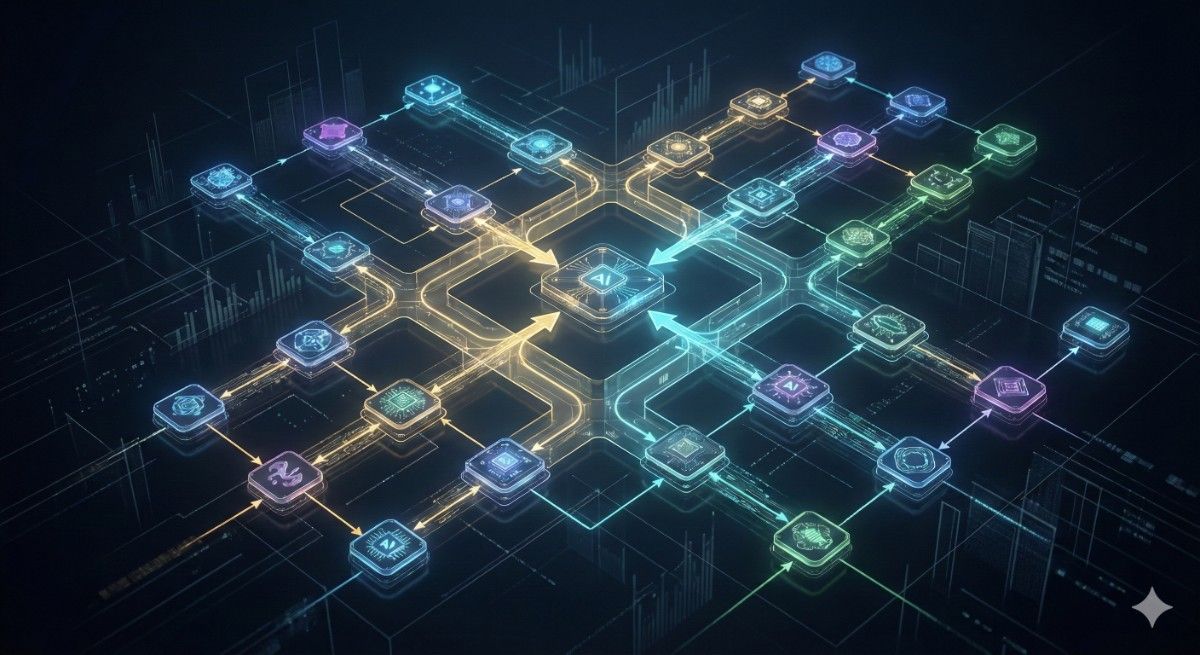
To orchestrate multi-agent AI meshes means coordinating the actions, communications, and workflows of multiple autonomous AI agents to achieve a complex overarching goal. This process is crucial for harnessing the collective intelligence of distributed AI systems, preventing chaos, and ensuring efficient, scalable, and reliable operations. Effective orchestration involves defining roles, establishing communication protocols, managing task dependencies, and monitoring agent interactions to guide emergent behavior towards desired outcomes.
Key Takeaways
- Orchestration is Critical: It transforms individual AI agents into a cohesive, goal-oriented system.
- Define Roles & Protocols: Clear agent responsibilities and standardized communication are foundational.
- Design for Scalability: Architectures must support growth and dynamic agent populations.
- Monitor & Control: Continuous observation and intervention are necessary for managing emergent behavior.
- Leverage Frameworks: Tools like LangChain, AutoGen, and message queues simplify complex implementations.
Understanding Multi-Agent AI Meshes
What are Multi-Agent Systems?
Multi-agent systems (MAS) consist of multiple intelligent agents interacting within an environment. Each agent possesses autonomy, specific capabilities, and often, a degree of reactive or proactive behavior. They work together to solve problems that are difficult or impossible for a single agent.
The Need for Orchestration
Without orchestration, a mesh of AI agents can become chaotic, leading to redundancy, conflicts, or an inability to achieve complex goals. Orchestration provides the structure, rules, and guidance necessary for agents to collaborate effectively. It manages multi-agent system orchestration to ensure collective intelligence emerges.
Core Principles of Multi-Agent Orchestration
Effective multi-agent orchestration relies on several foundational principles that guide the interaction and collaboration among diverse AI entities.
Communication Protocols and Standards
Agents must communicate clearly and consistently. Protocols like FIPA (Foundation for Intelligent Physical Agents) or custom APIs (gRPC, REST) facilitate structured information exchange. An Agent Communication Language (ACL) defines the syntax and semantics for messages.
Task Decomposition and Allocation
Complex problems must be broken down into smaller, manageable tasks. Orchestration involves intelligently allocating these tasks to agents best suited for them based on their capabilities and current state. This design process ensures optimal resource utilization.
Coordination Mechanisms
Mechanisms like negotiation, bidding systems, or shared blackboards help agents synchronize their actions and resolve conflicts. These methods are vital for managing AI agent interactions, particularly in distributed AI system design.
State Management and Observability
Maintaining a global or partial view of the system’s state is crucial for effective orchestration. Observability tools allow developers to track agent progress, identify bottlenecks, and debug emergent behaviors. It’s key for managing AI agent interactions.
Designing Your Multi-Agent Architecture
Designing robust multi-agent AI architectures requires careful consideration of structure, tools, and infrastructure to support seamless collaboration.
Centralized vs. Decentralized Orchestration
Centralized orchestration uses a single coordinator, offering simpler control but potential bottlenecks. Decentralized orchestration distributes control among agents, enhancing resilience and scalability but increasing complexity. The choice depends on the application’s needs.
Selecting Agent Frameworks
Frameworks like LangChain, AutoGen, or custom solutions provide building blocks for agent development. These AI agent collaboration frameworks offer tools for defining agent roles, memory, and interaction patterns, streamlining development.
Integrating Message Queues
Message queues such as Apache Kafka or RabbitMQ enable asynchronous communication between agents. They decouple agents, improve fault tolerance, and help manage high volumes of messages, crucial for scalable multi-agent AI architectures.
Ensuring Scalability and Resilience
Leverage containerization (Docker) and orchestration platforms (Kubernetes) to deploy and scale agents efficiently. Design for fault tolerance, ensuring the mesh continues to operate even if some agents fail. This is critical for robust multi-agent AI deployment.
Implementing Orchestration: Step-by-Step
A structured approach to implementation ensures a robust and functional multi-agent AI mesh.
1. Define Agent Roles and Capabilities
Clearly outline what each agent can do, its responsibilities, and its required inputs/outputs. This foundational step informs task decomposition and allocation strategy.
2. Establish Communication Channels
Decide on communication protocols (e.g., gRPC, REST, message queues) and design the message formats. Ensure agents can reliably exchange information crucial for designing AI agent workflows.
3. Design Workflow and Interaction Logic
Map out the sequence of tasks and how agents will interact to achieve the overall goal. This involves defining negotiation strategies, task handoffs, and error handling. This step defines the core of managing AI agent interactions.
4. Implement Monitoring and Control
Develop dashboards and logging mechanisms to track agent performance, communication patterns, and system state. Include mechanisms to intervene or adjust agent behavior if necessary. Effective monitoring supports multi-agent system orchestration.
5. Test, Iterate, and Optimize
Thoroughly test the multi-agent mesh under various scenarios, including edge cases and failures. Continuously iterate on the design and implementation, optimizing for performance, efficiency, and reliability. This is vital for multi-agent AI deployment.
Challenges and Best Practices
Orchestrating multi-agent AI presents unique challenges, demanding thoughtful strategies and adherence to best practices for successful deployment.
Managing Emergent Behavior
The interactions of many agents can lead to unpredictable, emergent behaviors. Designing robust feedback loops and control mechanisms is essential to guide these behaviors towards desired outcomes.
Security and Trust
Ensuring secure communication and preventing malicious agents from compromising the mesh is paramount. Implement robust authentication, authorization, and data integrity checks. This is a significant challenge in multi-agent AI deployment.
Debugging and Maintenance
Diagnosing issues in a distributed multi-agent system can be complex. Implement comprehensive logging, tracing, and visualization tools to simplify debugging and ongoing maintenance. This assists in managing AI agent interactions efficiently.
Future Trends: Explainable AI and AGI Orchestration
As AI agents become more sophisticated, the need for Explainable AI (XAI) within meshes will grow. Future orchestration will also focus on managing more advanced, potentially AGI-level agents, posing new challenges for coordination and control.
FAQ Section
- What is multi-agent AI orchestration?
- Multi-agent AI orchestration is the process of coordinating and managing the interactions, communications, and workflows of multiple autonomous AI agents to achieve a common, complex objective efficiently and reliably.
- Why is orchestration important for multi-agent systems?
- Orchestration is crucial for preventing chaos, resolving conflicts, ensuring efficient resource allocation, and enabling scalable collaboration among AI agents, allowing complex problems to be solved collectively.
- What tools are used to orchestrate AI agents?
- Tools include agent frameworks like LangChain and AutoGen, message queues such as Apache Kafka, container orchestration platforms like Kubernetes, and communication protocols like gRPC or REST APIs.
- What are the challenges of orchestrating multi-agent AI?
- Challenges include managing emergent behaviors, ensuring secure communication, debugging distributed systems, achieving fault tolerance, and handling dynamic agent populations effectively.
- How does agent communication impact orchestration?
- Effective agent communication, through standardized protocols and clear languages, is fundamental to orchestration. It enables agents to share information, coordinate actions, and collectively make decisions towards a shared goal.
- Can multi-agent orchestration handle real-time scenarios?
- Yes, by leveraging low-latency communication protocols, efficient coordination mechanisms, and scalable infrastructure, multi-agent orchestration can be designed to effectively manage and respond to real-time dynamic environments.
Conclusion
Orchestrating multi-agent AI meshes is a critical skill for unlocking the full potential of distributed intelligence. By carefully defining agent roles, establishing robust communication, and implementing intelligent coordination mechanisms, you can transform a collection of individual agents into a powerful, cohesive system. As AI advances, mastering multi-agent system orchestration will be paramount for tackling increasingly complex real-world problems. Begin experimenting with agent frameworks and architectural patterns today to build the intelligent systems of tomorrow.